

Focused Vs. Comprehensive Assessment: What Every LPN Needs to Know
Ask any LPN charting a shift change: can I complete a full head-to-toe, or does that finding belong to the RN? The answer isn't uniform. It shifts with each state's Nurse Practice Act, employer policy, and the inpatient vs. outpatient setting, from long-term care to home health to acute floors.
Focused assessments sit inside the LPN/LVN skill set, while comprehensive assessments remain an RN responsibility; the boundaries around initiating, interpreting, and signing off on findings differ across the CNA vs LPN vs RN scope of practice. Getting that line right protects your license, your patient, and the chart that follows both of you.
What Is a Focused Assessment in Nursing?
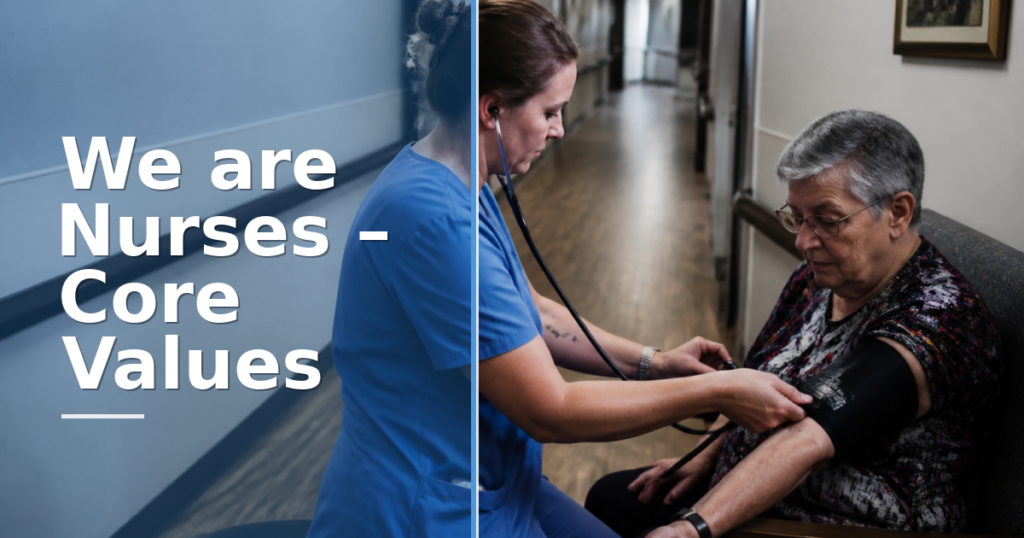
A focused assessment is a problem-oriented, targeted examination that usually zeroes in on one or two body systems or a chief complaint. Rather than evaluating the patient from head to toe, you collect data directly related to a specific concern, then communicate findings to the care team. Think of it as a clinical close-up: fast, purposeful, and designed to answer a particular question about patient status.
When Does a Focused Assessment Happen?
Several situations call for a focused assessment during a typical shift:
- Change in condition: A patient's blood pressure suddenly drops, prompting a cardiovascular and neurological check.
- New symptom or complaint: The patient reports nausea that was not present at the last assessment, so you evaluate the gastrointestinal system.
- Post-intervention check: After administering pain medication, you reassess the pain site to determine whether the intervention worked.
- Routine shift reassessment: Many facilities require reassessment at set intervals, and a focused approach lets you efficiently confirm that an existing problem is stable or improving.
A Quick Clinical Example
Imagine a patient on a med-surg floor who presses the call light and reports chest pain. You would not launch into a full head-to-toe exam. Instead, you focus on the cardiac and respiratory systems: auscultate heart and lung sounds, check the pulse rate and rhythm, obtain a blood pressure and oxygen saturation reading, and ask targeted questions about the onset, quality, and radiation of the pain. That data set gives the RN or provider exactly what they need to decide the next step.
LPNs and Focused Assessments
Both RNs and LPNs routinely perform focused assessments, though the scope differs by state nurse practice act. In most jurisdictions, LPNs are expected to collect focused assessment data and report changes to the supervising RN or provider. This is not a lesser role. Catching a subtle shift in respiratory effort or a new onset of confusion can change the course of a patient's care. Knowing how to perform a concise, accurate focused assessment is one of the most practical skills an LPN brings to the bedside every single shift.
What Is a Comprehensive Assessment in Nursing?
A comprehensive assessment covers every body system, head to toe, and typically takes 30 to 60 minutes to complete properly. It's the diagnostic backbone of a patient's chart, the record every future focused assessment gets compared against.
Building the Baseline
This full-body evaluation includes a detailed health history, vital signs, neurological checks, cardiovascular and respiratory auscultation, abdominal palpation, skin integrity review, mobility and psychosocial screening. Nothing gets skipped because the goal is not to confirm a suspicion; it is to establish what "normal" looks like for that specific patient so any later change stands out clearly.
When It Happens
Comprehensive assessments aren't a daily occurrence. You'll see them at admission to a hospital or long-term care facility, during a first home health or hospice visit involving LPNs in Hospice Care, and on scheduled intervals in some skilled nursing settings, often quarterly or after a significant change in condition. Outside of those windows, staff rely on focused assessments to track specific concerns without repeating the entire workup.
Depth Over Speed
Where a focused assessment might take five to ten minutes and zero in on one complaint, a comprehensive assessment demands time, documentation discipline, and clinical judgment across systems that may show no obvious problems at all. That depth is exactly why it isn't handed out casually on a busy shift; it's reserved for moments when a full picture is genuinely needed.
Whose Job Is It
In most practice settings, the initial comprehensive or admission assessment falls to the RN. Facility policy and state nurse practice acts generally assign this responsibility to registered nurses, with LPNs contributing data collection and ongoing focused reassessments within their scope, as described in the LPN Jobs Description. Understanding exactly where that line sits, and where it flexes by state and setting, matters enough to warrant a closer look in the scope-of-practice comparison that follows.
Focused Vs. Comprehensive Assessment: Key Differences at a Glance
Understanding when and how each assessment type applies is one of the most practical skills you can sharpen as an LPN/LVN. The comparison below distills the core distinctions across purpose, timing, scope, documentation, and role responsibility. Keep in mind that scope of practice rules vary by state board of nursing, and the next section explores those regulatory boundaries in more detail.
| Dimension | Focused Assessment | Comprehensive Assessment |
|---|---|---|
| Purpose | Zeroes in on a specific complaint, symptom change, or body system to monitor an existing problem or flag a new concern | Establishes a complete health status baseline by evaluating all body systems, health history, and psychosocial factors |
| Timing and Frequency | Performed repeatedly throughout a shift or episode of care, often triggered by a change in patient condition or a provider order | Typically completed on initial admission, at the start of a primary care visit, or at scheduled intervals such as annual physicals |
| Scope of Data Collected | Targets one or two body systems in depth; relies on an existing comprehensive database for context | Covers all body systems in a head to toe format, including subjective history, family history, lifestyle factors, and a full physical examination |
| Typical Documentation Format | Concise, problem oriented notes (for example, a brief narrative or flowsheet entry describing the specific finding, intervention, and patient response) | Structured, multi section forms often organized by body system or a framework such as Gordon's functional health patterns, capturing both subjective and objective data |
| Primary Role Responsible | LPN/LVNs perform focused assessments as part of their scope, collecting targeted data and reporting findings to the supervising RN | RNs conduct the initial comprehensive assessment, formulate nursing diagnoses, and build the care plan that guides subsequent focused assessments |
| Clinical Setting Most Common | Acute care, long term care, and any setting where ongoing monitoring of a known problem is needed | Primary care clinics, hospital admissions, and rehabilitation intake evaluations where a full baseline must be established |
| Relationship to Each Other | Does not replace the comprehensive assessment; it builds on the baseline data the comprehensive assessment already captured | Provides the foundational database that makes later focused assessments meaningful and clinically relevant |
Related Articles
Why Timely Focused Assessments Matter for Patient Safety
When LPNs perform focused assessments at the start of every shift and at each patient contact, they create a clinical safety net that catches subtle changes before they escalate. One acute-care study found that embedding systematic, early physical assessments into the nursing workflow was associated with dramatically better outcomes, reinforcing why mastering focused assessment skills is not optional for practical nurses.

How to Document Focused and Comprehensive Assessments: LPN Examples
Whether you are charting a focused finding or completing a comprehensive admission note, four elements must appear every time: the date and time of the assessment, the objective and subjective data you collected, the actions you took (including medications given and non-pharmacologic interventions), and any notifications made to providers or the primary nurse. The table below contrasts real charting structures so you can see how a brief, problem-specific focused note differs from a longer, systems-based comprehensive entry.
| Assessment Type | Sample LPN Documentation Note | Key Elements to Include |
|---|---|---|
| Focused (DAR): Postoperative Incisional Pain | D: Client reports increasing pain at the incisional site, rated 7/10, increased from 4/10 despite receiving oral Vicodin 5/325 at 1030. Vital Signs: BP 160/95, HR 90, RR 22, O2 sat 96%, Temp 38°C. There is 4 cm of redness surrounding the incision that is warm and tender to touch with moderate serosanguinous drainage. Lung sounds clear, HR regular. A: Dr. Smith notified at 1210; orders received for CBC STAT and increased Vicodin dose to 10/325 mg. R: Lab results pending. Additional Vicodin administered per order at 1215. At 1315, client reported decreased pain level of 3/10. Will notify provider of results when available. | Three-column DAR structure (Data, Action, Response). Data includes subjective complaint and objective vitals related to the focus problem. Action documents provider notification with time, new orders, and interventions. Response captures the patient's outcome and any pending follow-up. |
| Focused (DAR): Nausea and Vomiting | D: Pt. states she is nauseated. Vomited 100 ml clear fluid at 2255. A: Given Gravol 50 mg IV at 2300. R: Pt. reports no further nausea at 2335. No further vomiting. | Document the patient's subjective complaint, measurable objective data such as amount and type of emesis with time, the medication name, dose, route, and time administered, and the patient's subsequent status including resolution or persistence of symptoms. |
| Focused (DAR): Uncontrolled Pain in Long-Term Care | D: Constant ache in left arm. Winces and grasps when arm moved. Pain 8/10. Oxycodone 5 mg given at 0615 with no stated change in pain level. A: Discussed pain scale and alternative methods to relieve pain (breathing exercises, massage to right side and low back). Tylenol 1000 mg given by primary nurse at 0800. R: Continues to report pain at 8/10 with no relief from current meds. Report given to primary nurse. Suggested need to increase PRN of Oxycodone. | Record the resident's pain description and intensity, observable pain behaviors, prior analgesics and their effect, non-pharmacologic teaching or interventions, additional medications given, the ongoing pain level, and communication of uncontrolled pain to the primary nurse or prescriber. |
| Focused (SOAP): Chest Pain | S: Patient reports, "My chest has been tight and heavy since about 6 this morning. It is a 7 out of 10. It gets worse when I breathe deeply and spreads to my left arm." Denies nausea. PMH: hypertension, hyperlipidemia. Current meds: lisinopril 10 mg daily, atorvastatin 40 mg nightly. Allergies: penicillin (rash). O: BP 158/94, HR 102, RR 20, O2 sat 96% on room air, Temp 37.0°C. Patient is diaphoretic and appears anxious. 12-lead ECG obtained: ST-segment elevation in leads II, III, aVF. | Include detailed subjective data in the patient's own words (chief complaint, pain rating, symptom pattern, relevant past medical history, current medications, and allergies). Objective section covers vital signs, focused physical exam findings, and diagnostic tests. Assessment and Plan sections align nursing notes with provider interventions. |
| Comprehensive: Systems-Based Admission or Shift Assessment | A comprehensive note covers every body system in sequence (neurological, cardiovascular, respiratory, gastrointestinal, genitourinary, musculoskeletal, integumentary, psychosocial) using head-to-toe findings. Each system section includes both subjective reports and objective measurements. The note is considerably longer than any single focused entry and establishes the patient's baseline status. | Document the date, time, and setting. Capture baseline vitals and a full set of subjective and objective findings for each body system. Note all current medications, allergies, functional status, and psychosocial observations. Record any provider notifications, referrals initiated, and the care plan established. Always include the LPN's name and credentials. |
Thorough, accurate documentation protects both the patient and the nurse, whether the assessment is focused or comprehensive.
Knowing exactly when a finding is beyond your scope and escalating it promptly isn't a gap in an LPN's ability, it's proof the assessment skills are working as intended.