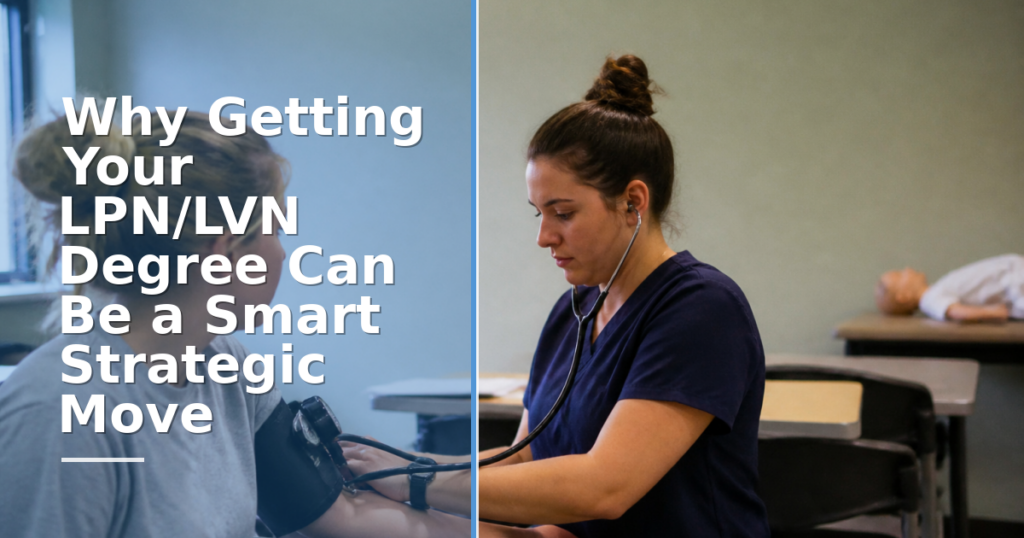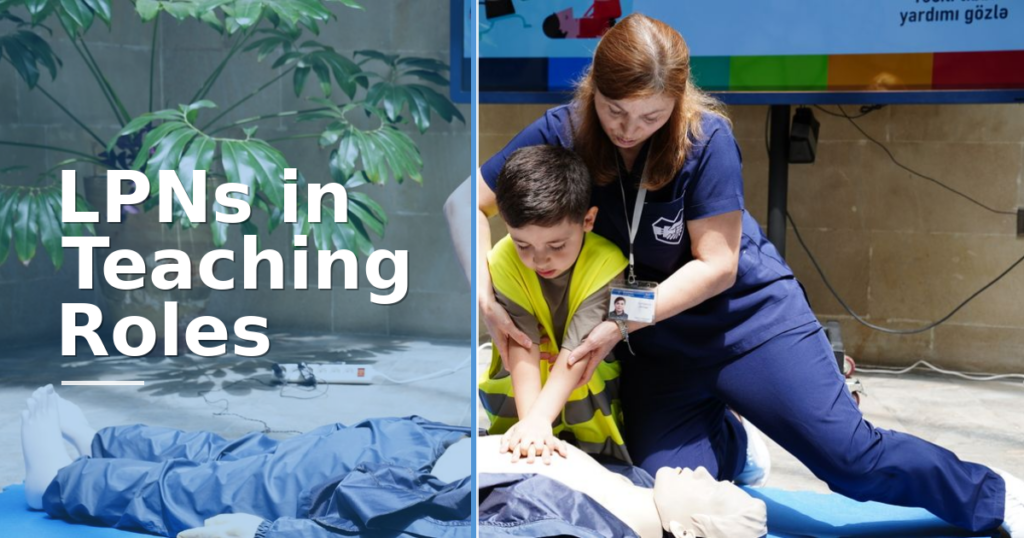


Clinical rotations are supervised, hands-on patient care hours in hospitals, nursing homes, and clinics during LPN or LVN training. Every state board of nursing requires these direct care hours before the NCLEX-PN, and none accepts fully online training as a substitute; simulation may partially replace clinical time in some states.
Most affordable LPN/LVN programs spread several hundred clinical hours across 12 to 18 months, weighted toward long-term care and medical-surgical units. Those placements test whether you can safely perform skills under pressure, communicate with patients, and absorb feedback in real time.
Licensure clearance rests on what you demonstrate on the floor, not what you memorize in lecture, which is why state boards treat clinical performance as non-negotiable.
What Are LPN/LVN Clinical Rotations?
Classroom mastery and bedside competence are two different skill sets, and every accredited LPN/LVN program is built on the assumption that you need both. Clinical rotations are the supervised, hands-on patient care hours you complete in real healthcare settings as part of your program, and they exist specifically to close the gap between knowing a procedure and performing it safely on a live patient.
Clinicals Are Not Optional
If a program advertises itself as preparing graduates for the NCLEX-PN and state licensure, it must include clinical hours. Didactic coursework, lectures, textbook exams, and even skills lab checkoffs cannot by themselves satisfy the practical experience requirements set by state boards of nursing. Every state requires a minimum number of supervised patient care hours before a graduate is eligible to sit for licensure, which means clinicals are baked into the structure of any legitimate LPN/LVN program, including the Fastest LPN/LVN Programs of 2026, not an optional add-on.
Skills Lab vs. Live Clinicals
Students sometimes conflate skills lab time with clinical rotations, but they serve different purposes. Skills lab and simulation happen on campus using mannequins, task trainers, and instructor-led practice runs. It's a controlled environment where mistakes carry no real consequence. Live clinical rotations move that same skill set into an actual facility, where patients have real vital signs, real anxieties, and real variability that no simulation fully replicates.
Where Rotations Take Place
Most programs rotate students through a mix of settings to build broad competency:
- Hospitals: medical-surgical floors, sometimes labor and delivery or pediatrics
- Long-term care facilities: skilled nursing and rehabilitation units, often the heaviest hands-on component
- Clinics: outpatient and physician office settings
- Community health sites: home health, public health departments, or school nursing programs
This rotation-based exposure is intentional. It gives you a realistic preview of where LPNs and LVNs actually work after graduation.
How Many Clinical Hours Do LPN Programs Require by State?
One of the most common questions prospective LPN/LVN students ask is how many clinical hours they will need to complete. The answer depends heavily on where you plan to study and seek licensure, because each state's board of nursing sets its own minimum program requirements. The table below shows published minimums for 12 representative states. Keep in mind that individual programs often exceed these floors, so always confirm hour breakdowns with your specific school before enrolling.
| State | Total Program Hours (Board Minimum) | Typical Clinical Hours Required |
|---|---|---|
| Alabama | 1,350 clock hours | 630 clinical hours |
| Arizona | 916 clock hours | 458 clinical hours |
| California | 1,530 hours (576 theory, 954 clinical) | 954 clinical hours |
| Connecticut | 1,500 hours over 10 months | At least 50% of total program hours |
| Delaware | Not specified beyond clinical minimum | 200 clinical hours |
| Idaho | 950 clock hours | 400 clinical hours |
| Kentucky | 1,100 clock hours | 550 clinical hours |
| Missouri | 1,000 clock hours | 400 clinical hours |
| Nebraska | 1,050 clock hours | 450 hours of direct patient care |
| New Hampshire | 1,500 hours | 750 clinical hours |
| Tennessee | 900 clock hours | 450 clinical hours |
Common Types of LPN/LVN Clinical Rotations
The Core Rotation Settings
Most LPN/LVN programs weight two clinical experiences heavily: long-term care and medical-surgical nursing. Long-term care often appears early because it builds foundational habits in personal care, skin assessment, mobility support, and infection control. Medical-surgical rotations then shift students into a faster acute-care environment, with more medication administration, post-operative monitoring, wound care, and structured documentation.
Other common rotations include: - Maternal-child/OB: postpartum assessments, newborn vital signs, patient teaching, and limited observation in labor and delivery. - Pediatrics: growth and development checks, pediatric vital signs, medication safety, and family communication. - Geriatrics: fall prevention, dementia communication, nutrition support, and end-of-life care principles. - Mental health: therapeutic communication, de-escalation, group observation, and safety checks.
Skills You Practice in Each Rotation
The setting changes, but the core skills stay similar. Students practice accurate vital signs, medication administration under supervision, wound care, assistance with activities of daily living, and clear charting. Patient communication is also a constant. In long-term care you may practice patience, repetition, and redirection. In med-surg you may practice explaining a procedure to an alert adult. In pediatrics you may practice talking with both the child and the parent. These repeated interactions are what build bedside confidence in licensed practical nurse careers.
Why the Rotation Mix Varies
Hospital exposure varies by program and regional clinical site availability. Some schools have strong hospital partnerships for acute medical-surgical placements. Others rely more on subacute units, rehabilitation centers, or community clinics, where LPNs in Community Health Settings often practice, when acute beds are limited. Rural programs may lean more heavily on long-term care and outpatient settings, while larger urban programs often offer broader hospital rotations. There is no single national rule that dictates exactly where every clinical hour must occur, so compare programs by asking where rotations are held, how many hours involve direct patient care, and whether the school places students or expects them to find their own sites.
Preceptors Vs. Clinical Instructors: Who Supervises You
Most practical nursing programs cap group clinical sizes at eight to ten students per faculty member, a ratio set by state boards of nursing to keep hands-on supervision realistic. That single number explains a lot about how your clinical days will actually run, and who is watching over your shoulder while you run them.
What A Clinical Instructor Does
The clinical instructor is your program's own faculty member, assigned to accompany a group of classmates through an entire rotation. This person checks your pre-clinical prep, observes skills, signs off on medication passes, and ultimately submits the grade that lands on your transcript. Because one instructor is stretched across eight or more students, autonomy is limited early on: expect direct oversight for medication administration, invasive procedures, and anything involving a new skill.
What A Preceptor Does
A preceptor is different: a working nurse employed by the clinical site, paired one-to-one (or one-to-two) with a single student, usually during a later or capstone rotation. Preceptors mentor day-to-day, answering real-time questions, modeling time management across a full patient load, and giving informal feedback shift by shift. They rarely assign your official grade. That responsibility typically stays with the clinical instructor or a faculty liaison who checks in periodically and reviews the preceptor's written evaluations.
Grading Versus Daily Feedback
This split matters when something goes wrong. If you're unsure about a technique, the preceptor is your immediate resource. If you have a grade dispute or need documentation for licensure purposes, that goes through the instructor of record.
Not every program builds a preceptor phase into the curriculum. Many LPN/LVN tracks, especially shorter or hospital-based diploma programs, rely exclusively on instructor-led group rotations from orientation through graduation. If one-on-one precepting matters to how you learn, ask programs directly whether and when it's offered before you enroll.
A Typical Clinical Day and Week at a Glance
Clinical rotations follow a structured weekly rhythm, but the hours you invest outside the facility matter just as much as time on the floor. Here is what a typical rotation schedule looks like across most LPN/LVN programs.

Can LPN Clinicals Be Done Online or via Simulation?
No state nursing board currently accepts fully online clinical hours for LPN or LVN licensure, according to NCSBN simulation guidelines. Patient care skills require hands-on practice with real people, and regulators draw a firm line between what can happen on a screen and what must happen at the bedside.
Where Simulation Fits In
High-quality simulation can substitute for a portion of traditional clinical time, but the percentage varies widely by state. The National Council of State Boards of Nursing published its landmark NCSBN National Simulation Study showing that simulation meeting strict standards could replace up to 50 percent of clinical hours without compromising student outcomes. Some states have adopted that ceiling, while others set tighter limits.
- Washington: Permits up to 50 percent simulation substitution when programs meet NCSBN simulation standards.1
- Illinois: Caps simulation at 25 percent of total program-designated clinical hours.2
- New York: Allows up to one-third of clinical education hours to be simulation, but only after the state education department approves the program change. Self-study or teacherless online modules do not count.3
- Virginia: Restricts simulation to 100 hours of the required 400, which works out to 25 percent of overall clinical time. Additionally, no single course may exceed 50 percent simulation.4
What Can Legitimately Move Online
Certain preparation tasks often take place outside the clinical facility:
- Care planning and nursing diagnosis assignments
- Electronic health record documentation practice
- Pre-clinical skills verification through recorded demonstrations
- Didactic coursework and pharmacology modules
These activities support clinical learning, but they are not replacements for direct patient contact hours.
Verify Before You Count on Simulation Credits
State boards update their rules periodically, and not every program uses its full allowable simulation quota. Before enrolling, confirm your state's current simulation cap with the board of nursing and ask the program exactly how many hours fall into simulation versus in-person rotations. A mismatch between your expectations and the actual breakdown could delay your eligibility to sit for the NCLEX-PN.
Simulation and online tools enhance clinical education, but they cannot replace the direct patient care experiences every licensing exam and employer expects you to have.
No simulation can replicate a patient who grabs your arm and asks you to stay because they are scared. That moment teaches more than any manikin ever could, and it is why every state board insists on direct patient care hours that technology simply cannot replace.
Essential Preparation and How to Excel in Clinical Rotations
Clinical rotations reward students who show up ready during LPN school. Preceptors notice preparation within the first hour, and that early impression shapes how much hands-on work you get for the rest of the shift.
Prep the Night Before
Pull your patient assignment as soon as it drops and build a working knowledge base before you walk in.
- Review the care plan: Know the primary diagnosis, active medications, scheduled treatments, and any recent changes in condition.
- Look up unfamiliar meds: Drug class, common side effects, nursing considerations. Do not rely on looking it up at the med cart.
- Practice skills in lab: Rehearse the technical piece (Foley insertion, sterile dressing change, insulin draw) until your hands move without prompting. Automaticity frees your brain for patient assessment.
- Pack your clinical bag the night before: Stethoscope, penlight, bandage scissors, black pens, watch with a second hand, drug reference, snacks, extra pair of socks. Rushing to find gear at 5 a.m. sets a bad tone.
Communicate Like a Nurse, Not a Student
Preceptors are busy. The students who impress them ask focused questions and report back cleanly.
Instead of "What should I do next?" try "I finished the 0900 meds on Room 4, vitals are stable, and I'm heading in to reassess pain. Anything else you want me to check?" That is essentially an SBAR handoff in miniature: situation, background, assessment, recommendation. Use it when you report changes, too. "Mr. K in 12 is complaining of new chest tightness, pain 6/10, vitals unchanged from 0800, I'd like you to come assess" gets a faster response than a vague "Something seems off."
Professionalism Is Non-Negotiable
Be on the unit fifteen minutes early. Full uniform, hair up, clean shoes, ID visible, no chipped polish, no strong scents. Silence your phone and keep it out of patient rooms. HIPAA violations, including talking about patients in the elevator or snapping a photo of an interesting wound, can end your program. Treat every piece of patient information as if the family is standing behind you.
Keep a Personal Skills Log
Maintain your own running list of competencies performed: date, setting, skill, whether you were observed or independent. Your program tracks required skills, but a personal log helps you spot gaps early, request specific experiences from your instructor, and later serves as concrete talking points in job interviews and specialty certification applications.
Overcoming Common Clinical Challenges
The hardest part of clinicals often isn't the skills checklist; it's managing the fear of making a mistake in front of a real patient while an instructor watches your every move. That tension between confidence and caution is normal, and most students who feel like frauds in week two are competent by week eight.
Managing Anxiety and Imposter Syndrome
Students who cope well tend to do a few concrete things: they rehearse skills out loud the night before, they arrive early enough to review the patient's chart without rushing, and they debrief with classmates after a hard shift instead of stewing alone. Reminding yourself that instructors expect hesitation, not perfection, at this stage helps reframe nerves as part of the learning curve rather than proof you don't belong.
Missing a Clinical Day
Almost every LPN/LVN program requires missed clinical time to be made up, whether through a scheduled make-up day or an alternate assignment.1 Deadlines vary: some programs give you 48 hours to arrange an alternate assignment, others allow up to three weeks to complete make-up hours.23 Most programs cap absences at one to three clinical days before the missed time threatens your grade or standing, and some track it as a percentage, with total absences above roughly 15 percent of clinical hours triggering automatic failure.14 A few programs apply grade penalties instead, docking a few percentage points off your theory grade per absence, with steeper deductions once you exceed the limit.56
Responding to Critical Feedback
When an instructor corrects your technique or documentation in front of others, resist the instinct to explain or defend yourself immediately. Ask a clarifying question, note the correction, and demonstrate the fix on your next attempt. Instructors remember students who adjust quickly far more than students who got everything right the first time.
Why Early Communication Matters
Because make-up windows are tight and absence caps are small, a missed day you don't report promptly can quietly become a missed deadline for rescheduling, which then jeopardizes on-time completion of the term. Call or email your clinical coordinator the same day you know you'll be absent, not after the fact.
Related Articles
From Student to LPN/LVN: Translating Clinical Experience to Career Readiness
Moving from LPN/LVN student to working nurse is not a separate step that happens after graduation. It begins during clinical rotations, when the skills you practice under supervision become the foundation for licensure, interviews, and your first job.
From the Clinical Floor to the NCLEX-PN
The tasks you perform in clinicals are the same tasks the NCLEX-PN asks about. Medication administration, vital sign interpretation, infection control, patient positioning, and basic care planning overlap directly with exam content. Strong clinical performance gives you a working memory of what safe, effective care looks like. When you can explain why you prioritized one patient over another or why you held a medication and notified the nurse, you are already practicing the clinical judgment questions on the exam. Treat every skill check-off and post-conference debrief as study time, not just a grade.
Describing Clinicals on a Resume and in Interviews
Write about clinical experience in active, outcome-oriented language, as detailed in LPN Resume & Job Application Advice. Instead of "completed clinical hours," use phrases like "practiced medication administration and wound care for up to 6 patients per shift under RN supervision." In interviews, use a simple structure: describe the situation, the task, your action, and the result. A short, specific example from a busy day often answers behavioral questions better than saying you are a hard worker. Mention the units, patient populations, and equipment you used.
Preceptor Relationships Lead to Jobs and References
Preceptors see how you work when no one is watching. They know which students arrive prepared, ask thoughtful questions, and accept feedback without defensiveness. If you perform well, ask your preceptor whether you may list them as a reference or whether they know of openings on the unit. Many LPN/LVN offers begin with a preceptor who tells a nurse manager, "I'd hire that student." Even when no job is open, a strong preceptor reference carries weight for later LPN & LVN Jobs.
Treat Every Rotation as an Extended Interview
Grades matter, but the impression you leave on a unit can matter more. Arrive on time, keep your phone in your bag, offer to help with tasks within your scope, and speak respectfully to patients, families, and nursing assistants. Treat each shift as if the nurse manager is watching for a potential new hire, because in many facilities that is exactly what is happening.
Clinical rotations remain the clearest indicator of NCLEX-PN readiness and first-job performance. The skills you practice under supervision, from medication administration to documentation accuracy, are the same competencies tested on your licensing exam and evaluated during new-hire orientation.
Before you progress too far, confirm your state's exact clinical hour requirements and any caps on simulation hours for community college nursing programs. These rules vary widely and can affect program timelines. With clinicals complete, structured NCLEX-PN preparation becomes the logical next focus. The groundwork is already done; now it is about translating bedside experience into exam confidence.